What is Resonant Body?
Integrative Body Mapping and Movement Protocols for Performing Artists
(RE)DISCOVER YOUR BODY
(RE)DISCOVER YOUR BODY
(RE)DISCOVER YOUR BODY (RE)DISCOVER YOUR BODY
Sensory Amnesia + Body Mapping
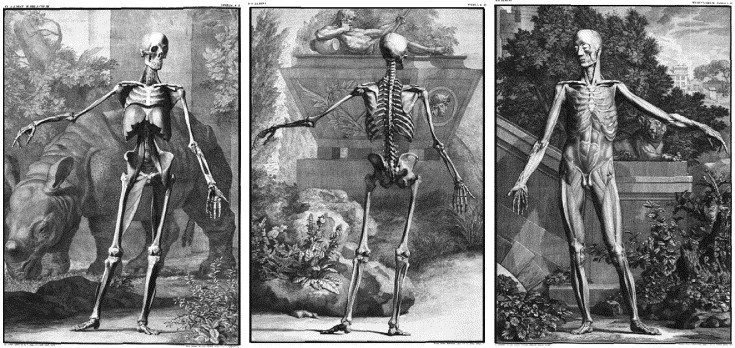
Our current modern and globalised society prioritises cognitive “thinking” processes over bodily ones, and this manifests in performing arts training. Well intentioned verbal cues like: release the jaw, breathe lower, and lift the head forward and up often get lost in translation. There are many reasons for this, but it cam often be attributed to “sensory amnesia,” a term developed by Thomas Hanna, the developer of the field of western somatics. Basically, it is a degenerative process of one’s kinaesthetic and proprioceptive awareness. In other words, how we sense our body in space, in movement and its general organisation are no longer consistently felt. Through this process of somatic forgetting, the way we perceive the organisation of our body (body schema) begins to shift into a disorganised state, affecting our movement, and how we engage with others and our environment. Thus, affecting our singing.
This often manifests as lingering challenges in:
learning sustainable vocal technique
alignment and posture
breath management
mobility in
jaw
lips
tongue
soft palette/velum
chronic vocal fatigue
Often our habitual movement patterns, and accepted learned beliefs about our bodies, become so deeply ingrained, that the reality of your experience often becomes difficult to perceive. Because the act of singing is, after all, a complex system of movement, perception of movement and the body become a central pillar of this approach.
This will be explored further and in more depth through the Resonant Body Protocols.
Below are three preparatory experiential explorations to demonstrate sensory amnesia and the current state of your body mapping, but before we begin, please read the Guidelines for Safe Practice.
Mapping the Fingers:
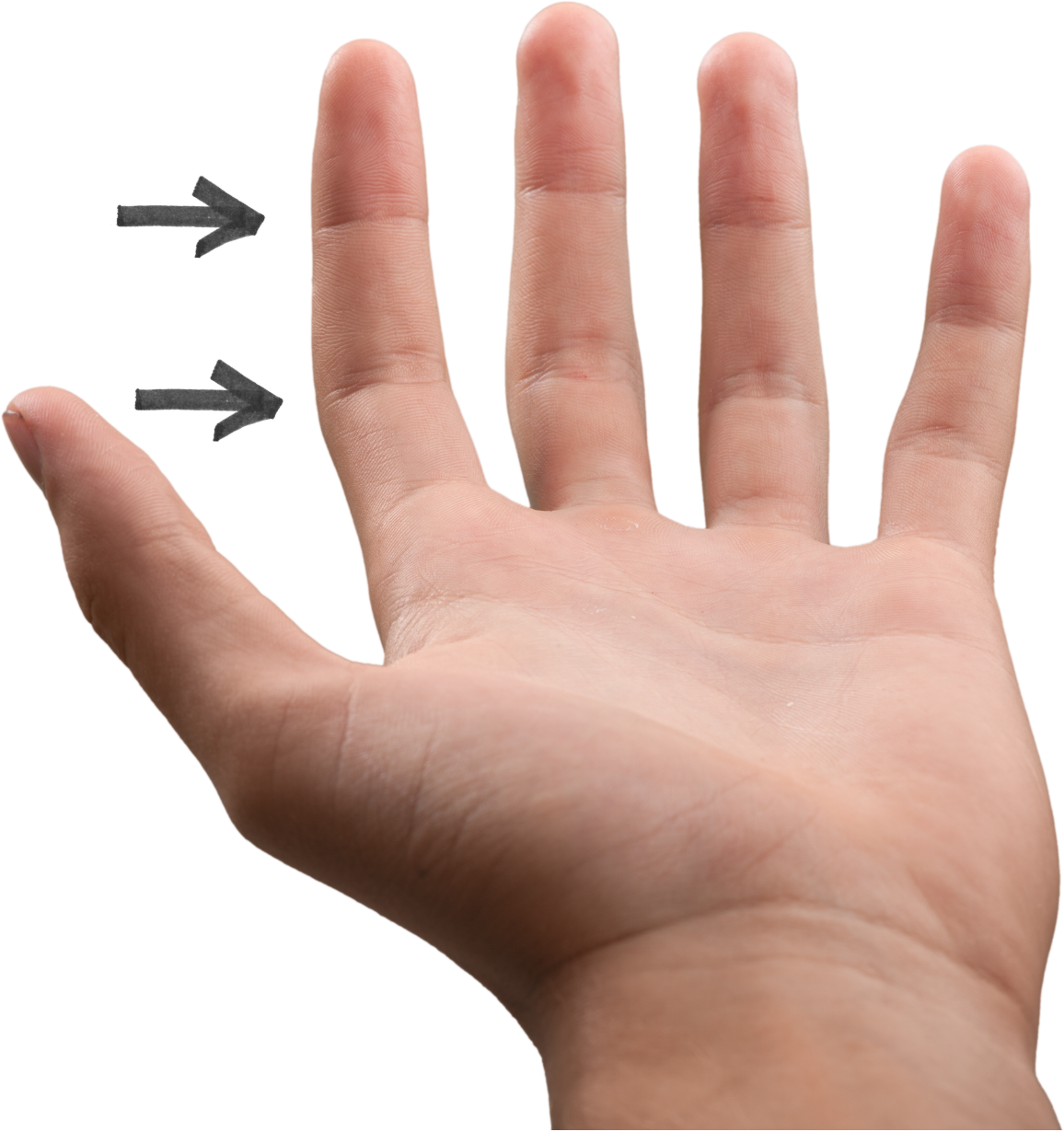
1) Take your hand and hold it with your palm facing toward you.
2) Notice the lines on each finger.
3) The first two lines furthest away from the palm locate a joint, try moving those two joints of the finger.
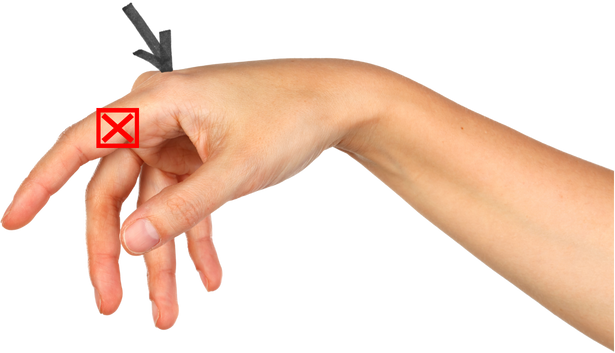
4) Using that logic, the bottom line of the finger should also be a joint. Try moving the finger from there.
How was that experience?
That last joint is actually located below the line closest to the palm. When attempting to move the finger where no joint exists obviously creates some inefficient movement strategies. Now, move the finger from the actual location of the joint and compare the following:
Preparatory Reflective Questions:
How were the effort levels between the movements based on different maps?
Where was the effort located?
What had to change in your experience to allow the movement to occur?
Compare each movement again, but with your eyes closed or looking away from your hand. Then ask questions 1-3 once more.
Mapping the Head and Neck Relationship:
1) Stand in front of a mirror and notice your head and neck.
2) Move your head from left to right, forward and back, and maybe even in a circle.
What is moving and where does the movement originate? Notice your current experience.
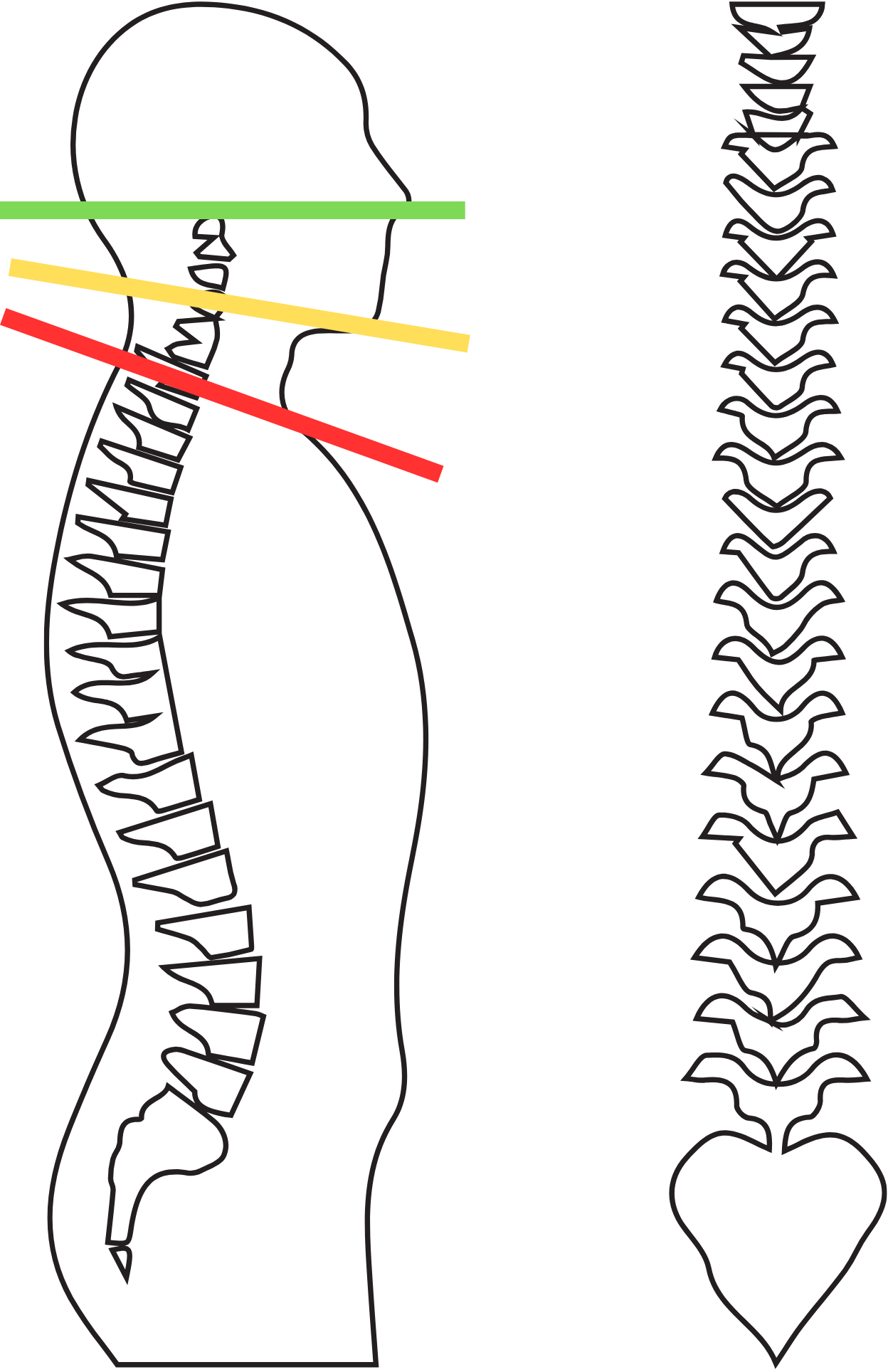
3) Take a look at the diagram to the right. Notice the different colored lines located in the head and neck region of the body.
Initiation Lines:
RED: located at the level of the collarbone — the two bones that radiate laterally from the center toward the shoulders.
YELLOW: located at the base or bottom edge of the jaw.
GREEN: located at the level of the nose and the ears.
4) Initiate the same head movements (step 2) three times. With each attempt, initiate movement from each line.
5) Compare your experience and use the reflection questions (above).
What did you notice? Did anything come to you as a surprise?
This means we are dealing with two languages: one that has become too loud, while the other one needs to be woken up and relearned. Thomas Hanna, the developer of the field of somatics, called this “sensory amnesia,” where the sense of our body in space, in movement, and general organisation are no longer felt.
Often, this results in many of my new clients showing up with zero or very little kinaesthetic or prioprioceptive awareness.
Did you notice any inconsistencies or uncover any insights about your felt experience? It is very common to have misalignment with your perception and the actual movement that occurs. These examples are illustrative, however, and only a starting point for this journey. This is because the movements required to create sound with the voice are not always visible. Creating strategies to feel what is happening when you sing, to align perception with movement an essential aim of this course.
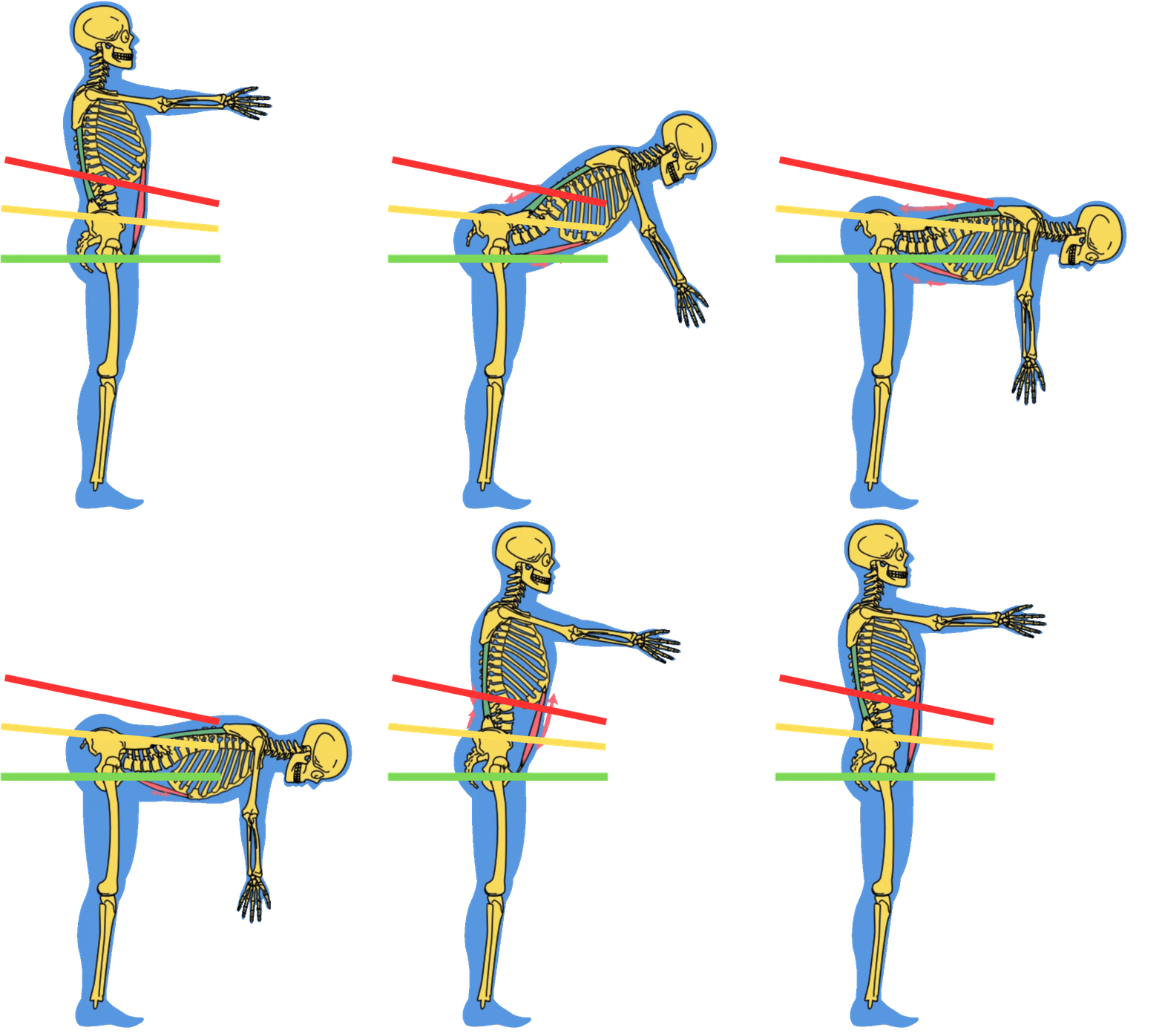
Mapping the Forward Bend:
1) Stand in front of a mirror and notice your hips and legs.
2) Bend forward with your eyes closed, as if to touch your toes with your hands.
3) Repeat the movement with eyes open, and notice where you initiate movement. Where was the effort located, and how did the movement feel? Notice your current experience.
3) Take a look at the diagram to the left. Notice the different colored lines located at the lower back, pelvis, and upper legs.
Initiation Lines:
RED: located at the level of the lower ribs.
YELLOW: located at the level of the belly button/navel.
GREEN: located at the level of the lower half of the glutes.
4) Initiate the forward bend (step 2 and 3) three times. With each attempt, initiate movement from each line.
5) Compare your experience and use the reflection questions (above).
What did you notice? Did anything come to you as a surprise?
A Transdisciplinary Somatic Voice Approach
The Resonant Body Protocols are a fusion of theories and practices that centers the singer experience in the process. At the core of this practice is a paradigm shift into Transdisciplinarity, which aims to address complex issues in a dynamic and collaborative way. Specifically, positioning a singer as a key contributor of knowledge towards finding solutions to their present problems, dismantling the master-student hierarchy traditionally found in voice training.
Underpinning these protocols is the BECOMEBECOME transdisciplinary framework and IoAS Nervous System Regulation Practices, that bridges embodied knowing with cognitive knowing, discovering and integrating insights through an iterative and process-based approach.
It’s main ideas draw from:
Alexander Technique (AT)
Body-Mind-Centering (BMC)
Nervous System Regulation Practices (NSR)
Dynamic Alignment Through Imagery (Franklin Method)
Biotensegrity
Phenomenology
Somatic and Psychology
However, these ideas act more as launchpads for individual and group exploration, rather than a prescribed set of concepts. Collective integration of personal singer experiences, practices, and theories add to the richness of this approach. Depending on the problem or challenge being address, a singer or group will being with their observational standpoint, to assess the situation, reflect, and eventually discover insights that lead toward solutions.
This will be theories and practices discussed in more depth within the Resonant Body Protocols.
The developer of the BECOMEBECOME framework, Dr. Andrea Traldi (2022), posits that theories are interconnected and responsive dynamic systems, allowing distinct theories and practices to converge (figure 1), by layering non-linear dynamic systems within process-based learning and reflection. This is explored through BECOMEBECOME’s iterative and temporal participatory processes that cycle between analytical and rational perspectives (figure 2), with the experiential and bodily ones, resulting in new knowledge that emerges out of their interaction (figure 3).
The process contains two distinct iterative processes, that are nested within a larger system of iterative reflection:
Reflective Components:
BECOMEBECOME Synthesis Field, drawing from established theories and practices, uncovering cognitive insights (left).
BECOMEBECOME non-linear embodied-cognitive reflective process: asking the singer what is true, what is felt, and how do ways of knowing converge (right).
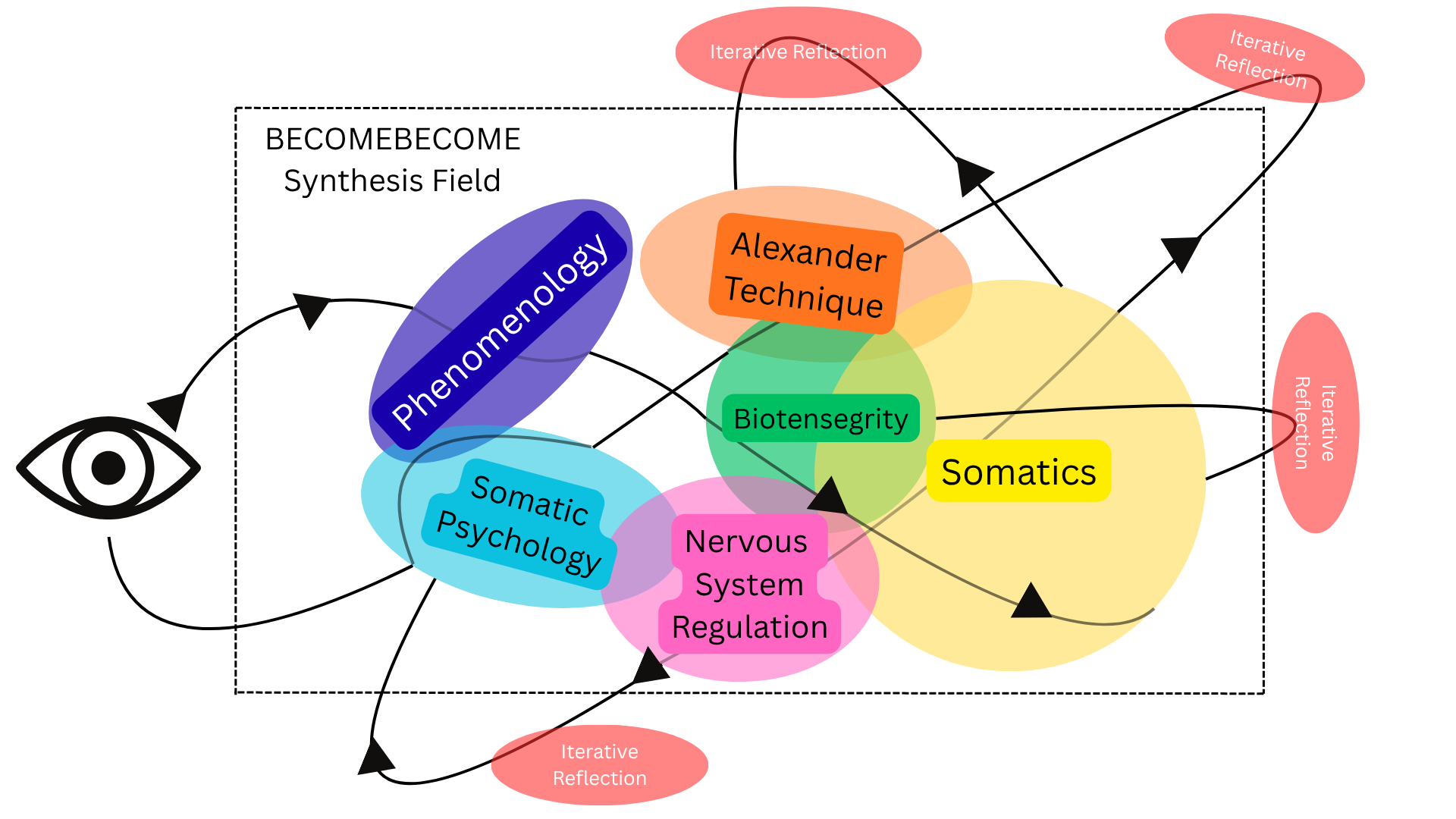
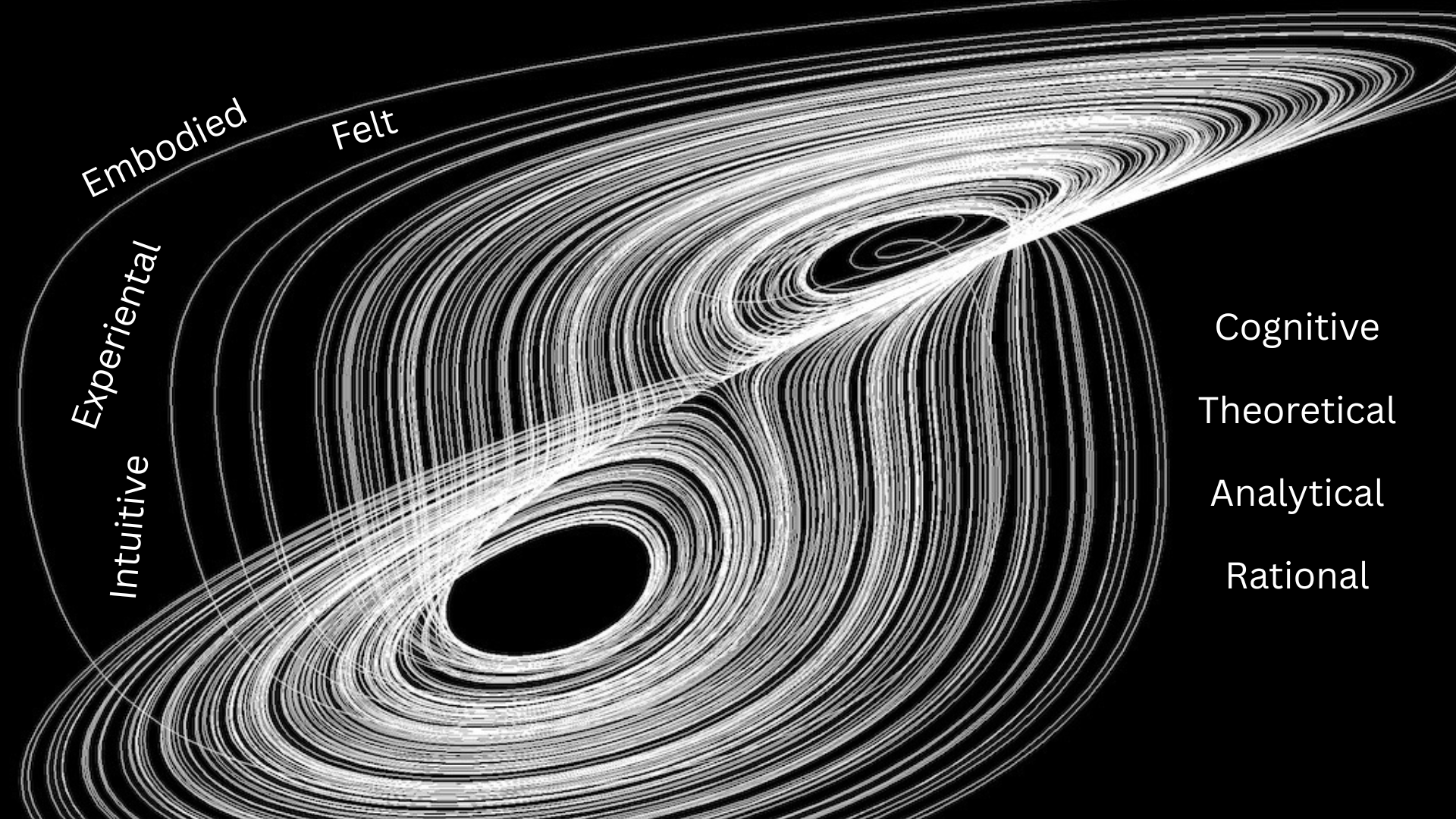
BECOMEBECOME Reflective Cycle: as applied in Resonant Body Practices
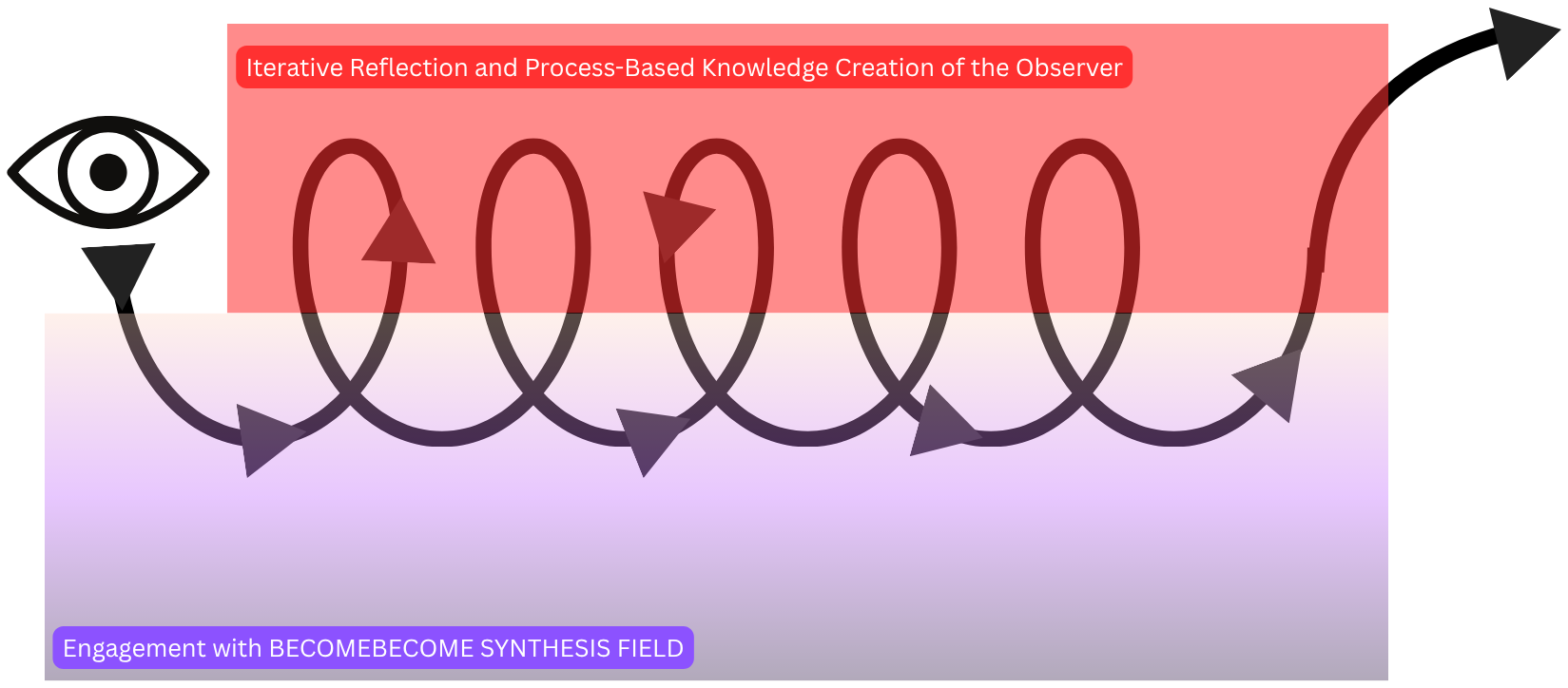
Next, the singer cycles between these two process forming a meta-process, where both cognitive and embodied insights are uncovered. Approaching this reflection in this manner acknowledges the complex plurality of observer experience, uncovering insights that are unique to individual standpoints (Orbe, 1998). Thus, acknowledging and honouring the subjective experience of your internal landscape (Roses-Thema, 2020), asking what is true for your. Through this reflective and cyclical process, knowledge is then co-constructed between observer(s) and these protocols, unfolding over time rather than in one observable moment (Atkinson-Toal, 2024), whereby the lived somatic experience can also be considered and integrated as material for knowledge creation.
This means, your experience matters.
Take what resonates in the mind and in the body, and question what does not.
Somatic Reflection
Now, what is the process the operationalises these frameworks? Drawing from the Institute of Applied Somatic’s somatic psychology and embodied phenomenology practices, this reflective process supports you in mapping an communicating your internal landscape or embodied experience.
Through the protocols, somatic awareness (felt sense of body) is developed, creating a process-based experience for the body. Traldi (2022) states that “an experience cannot be limited to instruction for action or instruction for awareness.” Both occur in parallel, revealing insights that are process-based and sub-conscious in their physical, emotional, mental, and transpersonal bodies. Recognising these process-based experiences through the body, and developing a language to communicate them is what creates agency for you as an artist and/or student in the voice studio.
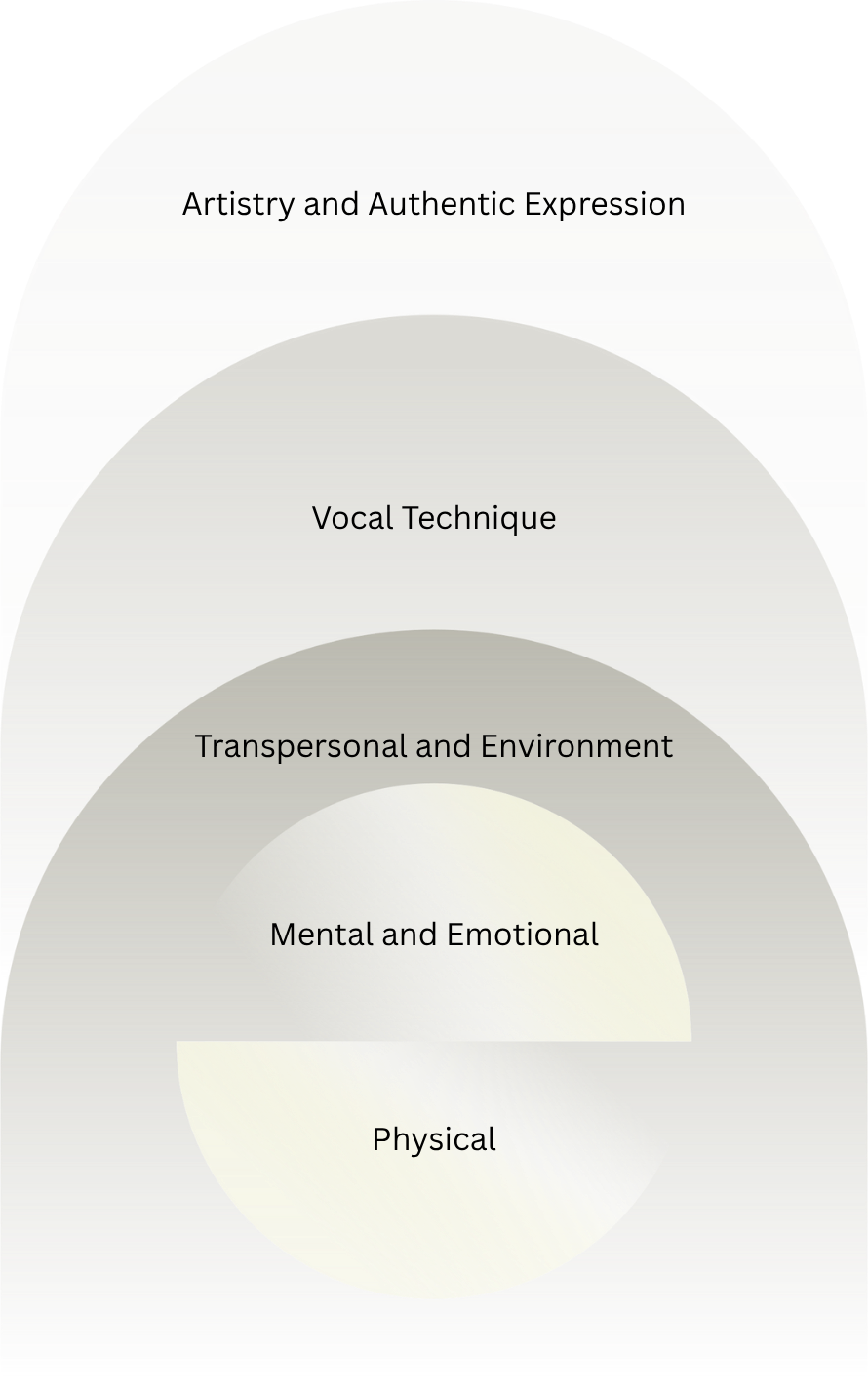
Reflecting on the different levels — physical, emotional, mental, and transpersonal — when working with the physical protocols, can reveal new strategies for overcoming limitations, and move beyond patterns across these levels.
To accomplish this, we turn to the practice of phenomenological reflection — to observe our experiences as they are, and to uncover our relational patterns to these experiences. According to Zahavi (2018), phenomenology is not merely a robust description of a phenomena; rather, it is also a description of the observer’s relationship to the phenomenon, asserting that phenomenon do not exist in isolation. Specifically, your experience of having a body, being within a body, and engaging with environment through your body, do not exist outside of psychological, environmental, cultural, and societal phenomena (Olsen, 2002). What is important is your relation to, and understanding of, your felt experience.
The figure on the left shows how these levels of reflection can be nested within one another.
It is also important to note that these levels interact with one another in a non-hierarchical way, despite the vertical positioning. Reflection can start anywhere within this system, and lead you in a multitude of possible directions over time, leading to insights that may have not been visible previously.
In a group or workshop setting, the collaboration takes on a deeper level of richness. The relational feedback obtained from multiple attempts of communicated personal insights, refines and affirms your experience. Moreover, shared insights across multiple singers may discover parallel or similar experiences, imagery, and thoughts.
More on this in the Resonant Body Protocols.
Biotensegrity and Fascia: A New Story of Human Anatomy
The story of our anatomy has shifted dramatically over the past few years, with the recognition of the fascial system as a structural and mechanical component of the body. Current research by the Fascia Research Society provide an updated definition of the fascial system (Bordoni et al., 2024):
The fascial system consists of a three-dimensional continuum of soft, collagen containing, loose and dense fibrous connective tissues that permeate the body. […] The fascial system surrounds, interweaves between, and interpenetrates all organs, muscles, bones and nerve fibers, endowing the body with a functional structure, and providing an environment that enables all body systems to operate in an integrated manner.
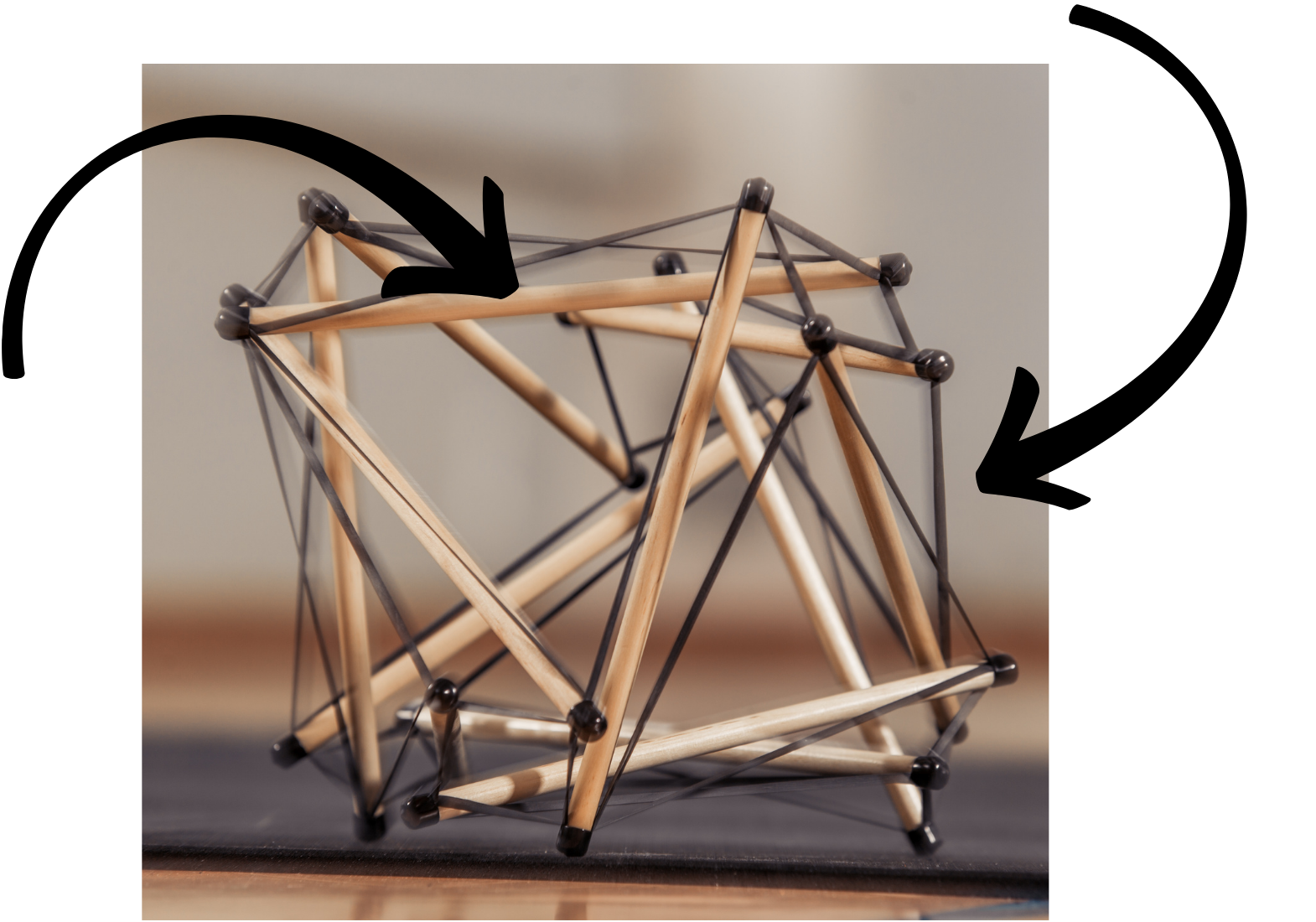
Here, Tom Meyers, the creator of Anatomy Trains and Structural Integration Practice explains Tensegrity and Biotensegrity in more detail:
In his demonstration of his tensegrity model, one can observe that when one area of the tensegrity system moves, the entire structure moves. Using tensegrity as a anatomical metaphor, the body can be viewed as a complex and integrated structure, rather than a collection of isolated parts.
That leads me to ask: what implications can that have with your singing? Have you ever experienced counterintuitive sensations in you lessons, coachings, or even performances that you cannot seem to explain? You might be experiencing the tensegral qualities of your body.
Before the emergence of Biotensegrity in human movement, voice pedagogy has utilised a classical or newtonian biomechanical model. That means the body was conceptualised as a collection of levers and pulleys, with the muscles acting linearly on the bone to produce movement. However, it is difficult to explain globally coordinated movement through these isolated parts. Furthermore, current modelling of the linear biomechanical model demonstrates that some muscles would be ripped to shreds if given the forces required for movement. For example, many muscles of the feet when standing on your tip-toes would not tolerate bearing so much force/weight (Levin, 2020). In singing, we see this often, for example, in alignment/posture issues in the head and neck. Left unnoticed, other regions of the body, like the jaw or tongue begin to compensate for a weakness or lack of movement. What this often demonstrates is a non-linear the function and redundancy of the human movement system. Basically, there are many ways to carry out a target movement like closing the vocal folds, raising the soft-palette, or assuming a desired posture, but some may be more sustainable than others. Therefore, a classical biomechanical system is not enough to describe the complexity of human movement and voice production.
Tom Meyers, as mentioned above, charted the the fascial system as long-range chains of tissue providing structural stability and demonstrates the non-linear structural relationships within the body.
At the center of the biotensegrity model is the fascial system.
Turvey and Fonseca (2014) have
Stephen Levin (2020), an orthopaedic surgeon recognised as bringing tensegrity into human movement science, however observed something quite different. In the operating room, during a knee operation, he noticed that the knee he was operating on would not make contact with the other bone. There was space that the body maintained between them. However, what was holding everything together? It was the fascial system.
Nervous System Regulation
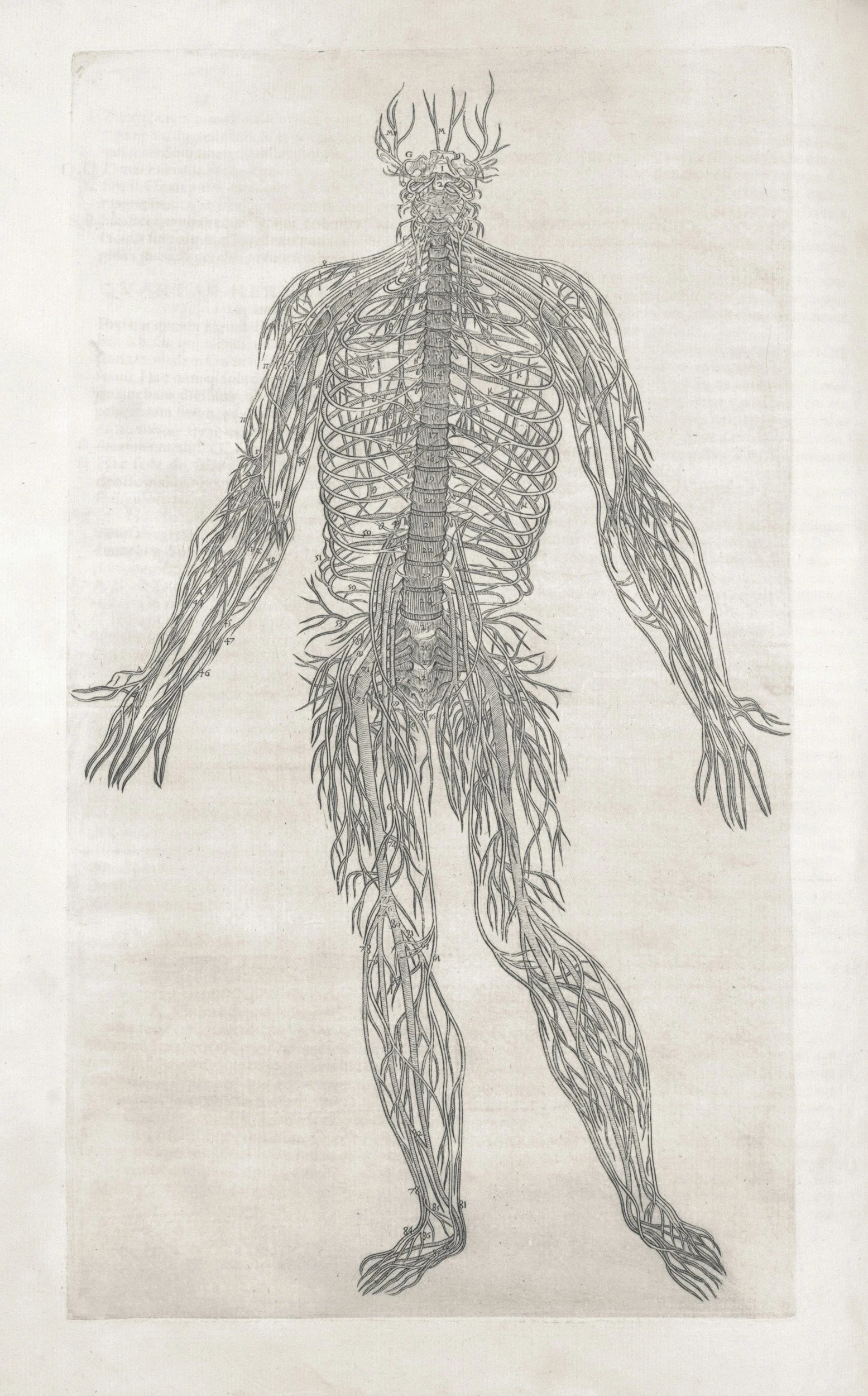
NSR Practices developed by the Institute of Applied Somatics (IoAS), then, becomes the next operational component for this project. Grounded in evidenced-based practice, it offers a model for self-regulation that also facilitates the development and sharpening of proprioceptive and kinaesthetic awareness, that has been adapted to foster adaptive body learning and reflection in singers (Traldi, 2022; Porges, 2022; Ragan, 2021). Within the protocols, it augments biotensegrity-informed Alexander Technique practice by bridging the cognitive, psychological, and physiological dimensions of singing. Specifically, it facilitates a bottom-up process of regulation through the embodiment and rebalancing of the fascial system and regulation of the autonomic and parasympathetic nervous system (Traldi, 2022), rather than a purely cognitive approach (Meyers, 2021). More concretely, NSR practices create space for you to examine your habitual singing patterns in a regulated state, allowing you to make changes in a more effective way.
More on this in the Resonant Body Protocols.
let's get started
let's get started
Now that you have an introductory understanding of what underpins these protocols and somatic voice research process, it’s time to start your journey!